Monday, August 10, 2009

30 Days 30 Stories, Installment 8, Why the Wind Dies

Long ago, the wind was free. It blew where it wanted and roamed the earth and the heavens. It would play in the East and the West, it had many friends and a few enemies, it would frolic and dance over the ground and the seas. But then one day, the sun was sad. The bright golden orb did not shine as brightly, it was clouded and in a haze of sorrow. The wind, a happy soul at heart, tried to comfort the sun, and when it finally did get her attention (dancing as it was around the earth, and making games of leaves and flowers), she smiled on him so brightly, the wind fell completely and forever in love.

Now, the wind is desperately in love with the sun. And so, when it is windy when the clouds roll in it is because the wind is chasing the golden orb of its love. And when it is calm when it is sunny it is because the wind is at peace; it's love is near.

Sometimes, of course, the sun is bright and shining and the wind races with pleasure over the earth, happy to see it.

At night sometimes the wind rushes toward the moon, trying to get near the sun. Or stay under the sun's bright rays reflected by her night-time looking glass.

And then there are the saddest times; when the wind dies. It has given up hope. The clouds are thick or it is night and there is no wind at all? The wind has died of love.

Friday, August 7, 2009

30 Days 30 Stories, Installment 7, The Money Tree

There was once a beautiful money tree. It grew outside the cottage of a woman and her family. It was green and verdant, and had been planted there when the girl was a baby. Her family had been very rich at that time, and had had money for such a gift. As it stood now, however, a great war had bankrupted the family and their town. All they had left was the small income from the strong money tree.

The money tree was quite young, but great, and it produced its fruit every spring. Every spring the family carefully gathered each piece of money as it ripened, and hid it away under the floorboards, and then they watched for another. The woman's husband had died in the war, and her children were small. She had a garden and a few chickens, but they were thin and scrawny. She needed the money tree for food, and she needed the money tree to buy medicine for her husband's mother, now very ill.

Many times the woman would find that a branch or two had been cut off by someone hoping to plant their own money tree. She shook her head sadly; that was not the way one could grow a money tree. Money trees could not be cut and grafted; they had to be carefully reared. As well, to produce money, they had to be given as gifts. Her parents had given her this money tree, but the cut branches were useless to their possessors. However, she new that if she were starving she would probably do the same.

It was deep into winter. The winds were blowing scudding snow across the ground. The money tree was asleep, and the gold beneath their boards dwindling. Firewood was scarce; soon she might have to use the remains of the chicken coop to burn. She didn't know how she would do without it. Perhaps the chickens would have to live inside, with them.

There was a knock on the door. She ignored it, hoping it was her imagination. The children were restlessly asleep, her mother-in-law slept fitfully. A guest would only bring chaos. But the knock continued. The woman sighed, smoothed back her dark hair, and wiped the sleep and weariness from around her eyes. She opened the door a crack to see who it was. A man and a bundle stood outside. He was scruffy and looked starving, but she was loathe to let him in. A man in a house full of women and children? She thought not. "Please..." he trailed off, looking at her pleadingly, and then opened the blanket and she saw there was a very young baby inside. Too young. She gestured for him to come in.

The baby was too small and too thin. He needed warmth and he needed milk. She didn't know what to do. There was no money left to buy milk, and their firewood was running out. The baby was very thin, but when it opened its eyes, the blue of them made her want to weep. They were the blue of her husband's eyes, and the blue that she had loved.

That morning she sent the man with some money for milk - it was almost the last of what they had. Then, looking at her firewood, she knew she would not make it. They dismantled the chicken coop. They burnt the wood. The baby did not ail, and began to laugh. They all gathered round, hungry, to the sound - it was joy in a time of need.

A week later there was no more wood. It was late in the day, and they were not prepared. A storm was coming in. The woman realized what would happen. In the cold the baby would not make it; they had no other choices. She gave the man an axe, and pointed to the money tree. He did not know what it meant, but merrily cut it down, whistling at the prospect of warmth. Inside, the woman wept silent tears as she ground corn meal for some pan bread.

They warmed their hands at the wood fire that night. The baby laughed. There was warmth, and in the warmth in front of the fire, the man took her hand gently. He smiled at her. Her eyes filled with tears, but she smiled in return.

Thursday, August 6, 2009

30 Days 30 Stories, Installment 6, the Watermelon People

There was once a very lazy god. All the rest of the gods mocked him and scolded him and made fun of him behind his back, but he really was too lazy to care. The only thing he cared about were his watermelons - suculent and juicy and bright bright red with black seeds the color of onyx and skins like emeralds and pearls. The rest of the gods laughed at him, but they certainly coveted his watermelons. However, he never chose to share. Instead, he slowly tended his deep-rooted, well-watered garden and ate the juicy fruit of his wonderful watermelons slowly rocking in his porch swing, and spitting the seeds into the field.

Well, one day he was lying under a tree, enjoying the god-like sounds of the heavens, and the great arching branches of a great arching god-tree, which looked something like a live oak, when up came a very sprightly little god, much like a hornet and began to bother him. It started with just wanting his watermelon for himself, but the little hornet-god was too clever just to ask, so he started to bother, which was his specialty. He buzzed and buzzed and mocked, as the lazy god eyed him with lazy contempt, until he got quite close and actually decided to steal a bite out of the lazy god's watermelon. He was almost too lazy to care. Almost. Instead of swatting away the little hornet, instead he clamped a big hand on his little scrawny neck, and pushed him into the watermelon. Then, balling the whole up in his hands, he threw it quite away. Noone bothered him about his watermelon after that - but the hornet god did get some watermelon. And out of it he built his nest- for after all, the sweet juice was good energy, and nothing like a gaggle of little hornet gods to make the world... ahem... a better place.

In any case, noone bothered the lazy god. But bother did find him. One sunny spring day a wonderful wood nymph happened upon the heavens, and upon the lazy god's broad patch of watermelon. It was all much too sunny for her - used as she was to the dappled shade, so she shrank into a shadow and hid under one of the biggest melons in the patch - which was quite large! When the lazy god came to pick it, as he had it planned as the afternoon's entertainment, she yelped in alarm (though it didn't sound like a yelp coming from her - more like a light hummingbird sound) and drew up to her full height. At her full height she was almost as tall as he, which was no mean feat.

Well, things being as they are, the lazy god fell right away for her. Maybe not exactly for her at first (for she was extremely comely) but eventually, after many days spent lazily but persistently waiting for her to come out of the dappled sunlight at the edge of the woods to take a piece or two of watermelon, the lazy god found himself rather desperately in love. But he did not know what he could do to win her. Always lazy, he was in a pickle. And with nothing to offer but watermelon. After a while - working away slowly, his mind did eventually come up with some ideas - he decided he had better just ask her what it was she wanted, and so he did. She smiled up at him, not sunnily exactly, because she liked the shade, but rather brightly like the light at the edge of the forest, and whispered that more than anything she wanted a forest with people at the edge of it. He sat down and thought about this. This might cause some trouble. And where was he to get people?

The spring had broken and summer was in high gear, then fall came and finally the ground was getting cold for winter. The wood nymph was getting cold and thin, and one day the lazy god left his small house to find her gone. She had left him completely. He was deep in sadness, like the snow over the remains of his watermelon patch. He went home and sat saturninely by the fire for days.

He was not happy that winter, in fact he had never been so miserable in all his immortality. And he cried. Not big tears, but dry, sad, miserable tears. He missed her, and he wanted her warm by his fire. She had never come into his house - happier outdoors - but he wondered that he had never asked her. Why had he not given her her people by the edge of the forest? Then she would love him!

He sat by the forest where she used to frolick. It was cold and desolate, but he sat nevertheless. He sat and sat. He sat for months. He sat until he heard the snow begin to drip, and he began to feel a warmness in the trees. And this made him sadder.

Finally, spring broke - a little, that is - and the trees began to bud. They were not complete, but they were beginning. The lazy god began to cry. And then, pulling out the very last of a piece of watermelon - a watermelon that had frozen over winter, but was just beginning to melt, he ate it slowly, and with every seed he wished for her return.

The seeds fell all the way to earth, where they bedded themselves deep in the melting ground. As spring began to spring forth, the watermelon seeds were watered by the lovely rain and sunned upon by the warming sun. And they began to bud. But they did not bud watermelons; rather, up from every seed there sprang a person, and together the pile of seeds became a village - bustling and full of life.

The lazy god didn't know. But down below, his wood nymph who had gone so far away in winter saw the watermelon people. She was delighted. She knew he loved her. And when another god came the lazy god's way, it was with a message.

Too tired to fight, the lazy god had nothing to say. "Go on, tell me," was his only response. The peremptory messenger god looked a little aghast, but cleared his throat and told. The gods had seen it, the lazy god was wanted on earth by the town he had started, and as the patron of the town would have to live near it always. The wood nymph was not included in the message.

With heavy heart, the lazy god headed down the great ladder. He found the village, and was momentarily lighthearted at the sight of the houses and the life of the people. But he was still sad, and went to the woods, crying the sobs of one who has cried too much. He sat down in a shadow, and it started up, with a little yelp (although, being the wood nymph, it was more like the sound of a hummingbird).

Wednesday, August 5, 2009

30 Days 30 Stories, Installment 5, The Windsparrow

There was once a girl who lived near a large forest. She loved to watch the animals, and the birds. She would often read in the fields around her home, and there she met a bird. It was not just any bird - it was blue and sometimes gray. It was sleek and beautiful and had the bluest greenest eyes. She was immediately delighted. It would land on the pages of her book and twitter at her, hopping and dancing gently. She would laugh and twitter back. It was soon a daily companion.

She would go to the pond, it would go to the pond. She would take a hike up the Big Hill, and it would twitter along beside her. She learned to love it - it was a very good friend. She became quite used to its company, and she saw it every day. Until, one day, it became quiet. It would not twitter, and though it came to find her, it would not chirp or sing. She twittered at it, she sang to it, but it would do nothing, and then it began to visit her but quickly leave. She would run after it, calling for it, but it would not come back and she could not find it. Sometimes it would return for a few minutes, after she called it, but then fly off again. Young and not understanding, the young girl began to cry, and to wonder what could be wrong. But she could not find it. Some nights she would be in bed, and she would hear it scratching at the window, but it would not come in.

Storms began to come to her little town. Strange storms - as if the wind were caught, or complete quiet, with no wind at all. The weather was muggy and warm or absolutely icy cold, and crops began to suffer. She heard the women talking, and the men she saw mourning in the fields over their lost potatoes. She cried double - once for her bird and again for her village. And the winds were great and fierce and angry. No small breezes to lessen their madness, just the rage of wind that knocked down trees and tore apart houses that were well-built, frightened small children and roared down lanes like great beasts.

One night, she heard him plinking on the outside of the glass, and she went to the moonlit windowsill. She opened the window, and gazed at him sadly. His feathers were silver in the moonlight, but he looked drawn and scruffy. "I cannot go with you tonight, my little friend," she told him. "I must stay in the house," but he whistled at her, and flew some few feet away, and then came back, chirping loudly. "I'm sorry," she said, frustrated, and tears coming to her eyes. "I cannot go. I will lose you in the woods in this dark, and then I will not find my way home again myself!" But he chirped stubbornly and hopped up and down. She closed the window, but he continued to plink at it.

Finally, in desparation, she crept out of the house, holding her quilt around her. "Alright, my little friend. Now where are we going?" He swooped around her, landed on her shoulder, and began to flap his wings. Now that would simply never work. She laughed. "You cannot lift me!" she exclaimed. "Fly ahead, but slow!" He went ahead of her, flying slowly, circling back. She followed the silver light of his feathers until they were deep in the woods. And then he flitted off. She didn't know where he had gone. He had left her. She was terrified - no sparkle of wings. She called quietly, but did not know how to go on. She was deep in the woods, just as she had thought. Had he lost her too? Where was he?

A great wind began to come up, and in the dark woods the trees creaked. She heard all sorts of noises, but there was no sparrow. The wind roared through the woods, until it seemed the whole forest was shaking around her. She huddled in the roots of a big tree, her blanket wrapped around her like armor, shaking and silent with fear. Finally, dawn began to break. She saw the lightening of the sky between the dark, brooding branches, and she heard the first chirps of the normal birds. But not her sparrow. She was angry. Very angry. How could her friend leave her? He was a dangerous thing, a witches familiar! He was very bad! But when the dawn broke completely, and the sun began to light the branches of the trees down to the very ground, she saw around her the broken silver of wings. There were birds scattered on the ground, all of them dead. There was no explanation. They were like her bird, but not her bird. And she found, after rising, that there, under her was a deep hole going into the ground - and at the back of the hole, quite underneath her the whole night, there was a beast. It was no bigger than her arm, but it had big wings and a cruel beak. It was dark, like the night, and it seemed it, too, was quite dead.

She wasn't sure, but it looked as if with her blocking of the hole the beast had died in simple suffocation, and for a moment she felt a pang of remorse. Until she saw the great beak-gashes on the silver birds around her. And only one voice she listened for, but she knew she would not hear it in the uproar of the forest morning. The voice of her silver bird. She did not hear it, but after a moment, she did feel slight flutterings within her comforter, and opening it up, out flew the blue and silver sparrow, alive and warm. She put out her hands to cup it, but with a cry, it flew straight into the sun, and whistled merrily. Other birds joined it, and they flew in ever-circling arcs upward, free, faster and faster, until it seemed they were simply blurs, and then, down around her, the little girl felt the light warm feathery breeze of summer, as she used to feel it before... well before her little bird had become so sad.

30 Days 30 Stories, Installment 4, Success

Two boys entered school together. One sane and plump and normal. Brown hair, blue eyes, fine hands. One wiry and waxy and a little mad. The school was dark and echo-ey, halls spreading in many directions toward schoolrooms dusty and moldering. But it was a school of the county anyways and so they went.

They grew older and upon graduation found themselves on different paths - the wiry, energetic Alex toward great success as a financier and entrepreneur, and the other, William, with a slight interest in music and literature and degrees in history and botany. William did not wander far afield, but slowly his circle of knowledge broadened and by the time he was thirty he found himself in France, soon to be the son-in-law of a French publisher, by way of his rather enchanting daughter - a Frenchwoman with dark curls.

It was at this time that William heard of Alex's meteoric success and toasted it quietly in his rented French rooms with a bottle of fine but inexpensive canary.

William soon received an invitation to a summer party in Rimes, where Alex had his country house. Happy and somewhat starstruck, William accepted with the request he could bring his lovely fiancee.

They arrived in late afternoon to the grand estate. Alex had indeed done well for himself. Gravel drives led up to the house and stables - yes indeed, there were stables - and the house was no small country cottage. They were greeted by Alex's butler and shown up to their spacious accommodations. Separate bedrooms for them - how proper an old-fashioned of Alex! But perhaps he just had too many to spare...

Dinner with Alex was nothing to sneeze at. Groomed thoroughly and in their finest, the couple descended the stairs to an eerily well-lit dining room. It looked like a movie set. The rest of the party had already convened, and a motley assortment of glittering individuals sparkled in the intense electric lights and endless, polished mirrors that filled the room. Among this beautiful throng, Alex stood at the center of a circle of young and beautiful women - languid, lazy, not attending women so focused on their own interests it was obvious they had little use for Alex's. His hold of his champagne glass was elegant but his face had grown rather brutal.

Alex's eyes lit on William and Etienne. "Ah! Old friend!" he cried, holding his glass up in salute, and the liquid sparkled thinly, like the sets of women's eyes which turned upon them.

Alex's dinner party was pleasant in a clebrity way; talk of nights on yachts, private islands, premieres, theatre events. It was rather overwhelming. But William shcook his head in wonder and cast surprised looks at Etienne, who cast them back with a hidden smile. They were seated apart again, but no matter. William raised his wine glass and a warm smile to Etienne, and she toasted him in return. Two paupers at the palace.

Over the next few days the party expanded a little - days by the pool, tennis, horseback riding, golf. William was more often than not separated from Etienne by this or that circumstance or arrangement, and only found relief from this in the hours when she crept to his room and into his arms.

The last week (it was a two-and-a-half-week stay) caused William some alarm. On repeated occasions he would find Etienne alone with Alex, chatting casually but closely. There was no doubt that William loved Etienne, but could Etienne resist the temptation of a life like Alex's?

The left on a dry, rather gray midweek afternoon. The auto, unused for some time, started splutteringly but finally cuaght and roared. Etienne looked distractedly out the window. A pressing silence filled the car almost to bursting point.

William couldn't see beyond the brim of her hat, but the dark curls of Etienne's beautiful hari escaped and lay, always alive, against the milky tan of her nekc. William waited, his breath shallow.

"You know William, I think I ought to tell you..." Etienne began, then halted.
"Yes?" his voice sounded dry and dusty, but it was out now. He had asked the question.
"Your friend Alex, he - er..." she took a breath. "He passed at me."
William looked at her quizzicially. "Passed?"
"Yes - he asked me to his yacht for the summer. Just me. Only me."
"Ah-" suddenly it became clear. Alex had propositioned his fiancee. Rage began to burn. Rage and fear.
"And what did you say?" he asked, trying to make his voice academic.
She turned to him with a snap. "Why I said no. Absolutely no, of course. I was not interested!" she exclaimed.
William looked apologetic. She saw it, and settled back in her seat with a sigh.
"Well, I find him so boring anyway. He only cares about ---" she pondered.
"Success," supplied William. A warm glow filled him. For the first time in his life, Wiliam felt truly successful. And it was not due to anything he had done. It was a feeling he would feel many times in his life with Etienne. He only hoped that at this moment she felt equally the blaze of absolute and unmitigated success that he did.

Monday, August 3, 2009

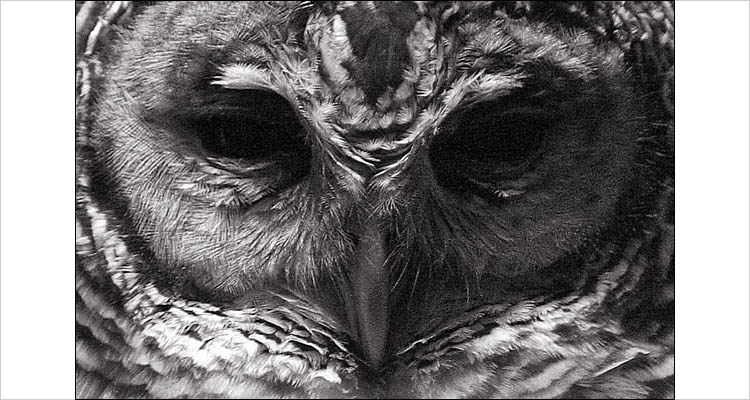
30 Days 30 Stories Installment 3, The Owl's Son

The Great Old Owl had a son. He was a bright, soft gray. Silvery in the moonlight, he flew with the grace of a night breeze, whispering through the bowing arches of the leafy forest and the still-warm summer fields.

The Old Owl was very proud of her son. His eyes were sharp and his dive was quick. He would watch the night when she was gone. As the sun rose, she told him stories of those before, the Old Ones, who were huge, flying to the moon and back, carrying the young humans to their home on earth, protecting them from the hurricane and the tidal wave.

Now they were only the Night Watchers, destined always for the shadows on the edges of the magic time - the shadows between day and night, history and future.

The Young One listened, quiet. He listened and he watched.

In the dusk, he rose early and went to the edge of the fields, where the People were. They moved slowly over the ground like squirrels on their hind legs, but they were tall and some were very big. He watched and watched. Until he saw her.

Her head was bright gold, her movement over the ground graceful as if she was floating. And when she turned in question to his hoot, her eyes were big and soft and dark. He was obsessed. He followed her into the day, his hours changing to catch more glimpses of her. She bathed in the cold stream in the early morning, and with his big, radiant eyes he watched her. She gathered thyme and rosemary in the meadows and along the sea, and flying low in the late afternoon, wings slow with sleep, he would come behind her.

She was a tall girl, and she was a dreamer. She watched, too, watched the others pairing off and moving to small homes, having small babies. She wanted a home, she wanted babies. But she also wanted her time in the fields, her time in the forest. She wandered the lanes and wondered if it would ever come, that time for hearth and fire, rather than the time for windy nights spent gazing at the crashing waves. Her legs were brown with sunlight when she realized the time had come, and her companion, the gray owl, grayer now and thin with longing watched it too. The boys came, the men came, a blur of animals to him, focused as he was on her - her golden hair, her soft brown eyes.

He came upon her one early morning, after hunting. She was weeping. He brought her a rabbit - fresh and white and beautiful. He had cleanly snapped its neck. It looked still alive, warm even to the touch. He longed to have it, he was very hungry. But he brought it to her and offered it to her and she gazed at it, not at him, and went back to weeping. When he awoke, nearly dead from hunger, in the evening, he saw it still upon her window sill, cold and wet with an autumn rain that had fallen. He took it away, ashamed, and ate it cold in penitence.

He stayed with her still. She came home one night with a man and he heard her cries - but they were not cries of pain. She was with the man for many years after that - but the Young One's ardor had not dimmed. What was a two-legged love to love like his, the love of a Watcher? He could not comprehend it, nor did he care. Only once, when a dark magpie came to sing in her window did he feel jealousy - for she listened to it, and cocking her head to the side, spoke to it. But he could not understand her words. He attacked it, and it lay dead in the forest not long later.

Many years went by, and the Young One became old. But he would not go with any owls, he had no time and little interest. He followed her, and he protected her with the beats of his wings in the sky. She was never alone in the night, and though she never needed it, he was there in her defense. Although he knew not what against. She was never alone - and moreover, neither was he.

She had turned as gray as he. She was like a ghost of herself - slowly moving through, haunting, her own house. She sat upon her house's steps and knitted near-sightedly, humming a little tune to herself. The man was not with her any more. He had disappeared one day while the owl was asleep in the rafters, and a new mound had appeared in the church yard. The Young One watched still, she was still as beautiful; though her hair was no longer bright, her eyes were still soft as the back of a caterpillar. Small people came and gathered around her, and she smiled and laughed at them. Some pointed, and babbled in his direction, but he took no notice. She turned around slowly, and for the second time in her life, she looked at him. She smiled once, into his eyes, and turned away again.

The next day, there was no movement in the house. In the night the old lady had passed, and outside her window, a very old gray owl lay, silent and dead.

Sunday, August 2, 2009

30 Days 30 Stories, Installment 2, The Grower

There was once a very cruel woman. She was unkind to her neighbors, nasty to her children, and generally difficult. She was very thin with a long, sharp face, hair pulled back in thin strings, and she wore a somewhat dirty apron at all times. She had no love; her husband, whom she had married from the necessity of their being no more room at her parents' house (8 children and another on the way) had died in his sleep, suddenly, when their children were still children. She always thought it unfair he had died in his sleep, peacefully, when she was left with a violent and brutal world. A good accident would have been so much more satisfying.

As it was, and as aforementioned, she had no love. But she did lavish care and gentleness upon one thing - in fact, a set of things. She had a garden of sorts, which she tended with care. Truly, it was just two strict lines of flower beds, and within them she planted very neatly the seeds. But she cared for it nonetheless. The two raised rows were always fresh and without weeds. She spent hours of her days in the garden, weeding and laboring and watering. However, nothing ever grew. She worked and worked and worked. She never gave up. In fact, it was in her garden that her daughter found her, slumped over a trowel, quite dead. By that time, her hair was an iron gray, and her gaunt figure yet gaunter in a worn-out brown sack dress. Her daughter laid her to rest beside her husband, the family cried as was customary, and then carried on.

The daughter was nothing like her mother. She was playful and carefree. She had escaped the stern, angry words of her mother and the lashing tongue to play in the woods and the fields. She had taken to her heels instead of bandying arguments about the little stone cottage. And it had served her well. Her heart was open, and her mind was clear (if a little anti-social from all that woods-wandering). Her brother, a tall, severe man, had moved to the city and appeared in a fine dark suit to the funeral, curtly paid his respects, and promptly removed himself again.

Charlotte, for her name was Charlotte, returned from her job and her shared room with other singles in the Upper Middleton, and went back to Little Middleton, and her mother's house, to get it ready for selling. She didn't really know what needed to be done, but thought that she should probably do it, nevertheless. She laughed at the cat, cranky and arthritic, who nevertheless greeted her with purrs, and she laughed when he brought her a fieldmouse. She laughed at the birds who sang in the trees, and she began to see what she must do to settle the house.

The house was quite in order. Her mother had been perhaps a mean woman, but an incredibly clean one. All the linens were laundered and mended, all the dishes washed and put away, there was a thin layer of dust about the place, but other than that, there was nothing needed doing. Charlotte sighed. She really wished there was just one thing she could do for the memory of her, the woman who bore her. She glanced out in the fields. And there she saw the garden. It had become overgrown and rather sad-looking in the three weeks it had taken her to settle her life and come to Little Middleton, and to the cottage. The rows of dark earth were graying in the sun, weeds had taken hold in the prime soil, and there were blackberry vines creeping in already. She sighed. Her mother had never found any luck in the garden - but... but... it was something Charlotte could do. She took her mother's garden basket, austere and worn, and carried it with her to the garden.

She weeded and watered and pruned, and soon it looked lovely. Absolutely lovely, clean and neat just as her mother had had it her life. And Charlotte smiled a sad smile, and rose up off her knees, stiff from sitting, and went in to dinner.

It was a few days later that Charlotte noticed, with not a little surprise, that there seemed to be seedlings starting in the garden. Her heart caught in her throat, and she choked her surprise. She was soon to be seen carefully spreading netting over the garden, warding off birds, and watching. A week later, the flowers had sprouted well. Rose bushes, poppies, and lavender came up with a mad abandon. The flowers were intense and pure. The smell was beautiful. Never had two rows of earth seemed so full of growing life. Charlotte watched and weeded. Then she called her brother.

They looked at the garden together. They looked at each other. It was about ten minutes later, as she wandered through the garden, that Charlotte realized her brother was crying silently. She went to him, put her arms around him, and sighed.

Together, they took the flowers from the garden, and put a bunch upon her grave. And the flowers there, from seed no doubt, took root and grew. They grew and filled the churchyard. At Charlotte's wedding some years later, it was the smell of lavender and roses that blessed the ceremony, and at the death of her brother many years after that, lavender and vine roses covered his grave in weeping wreaths.